Replacing a Calgary sewer line, one step at a time.
Permits, locates, Calgary soils and depths, what the crew does each day, inspection, backfill and the records you keep, explained in the order a real job happens.
CalgarySewerReplacement.ca is an independent guide to the process of replacing a sewer line in Calgary: scoping the job from camera footage, the City of Calgary plumbing permit and who applies, Utility Safety Partners and private locates, digging in Calgary soils and depths, winter work, inspection, backfill, restoration and records. The site belongs to an information and quote-request network and does no contracting work itself.

Play a whole Calgary sewer replacement, from camera to new sod
A Calgary lot cut open from the basement to the City main. Choose the method, what covers the line, the season and whether the work reaches City land, then play the job or scrub through it stage by stage.
What the model shows, in words
Six stages, and only one of them is digging
The model walks through the same six stages as the Replacement Timeline Planner: camera and quotes, permits, utility locates, work on site, inspection, then backfill and restoration. The machine is only on the lot during the middle stretch. Most of the calendar belongs to paperwork, marking and settling, which is why the start-to-finish range is counted in weeks while the on-site part is counted in days. The strip under the picture shows the stages in order rather than to scale.
Why the flags go in before the bucket
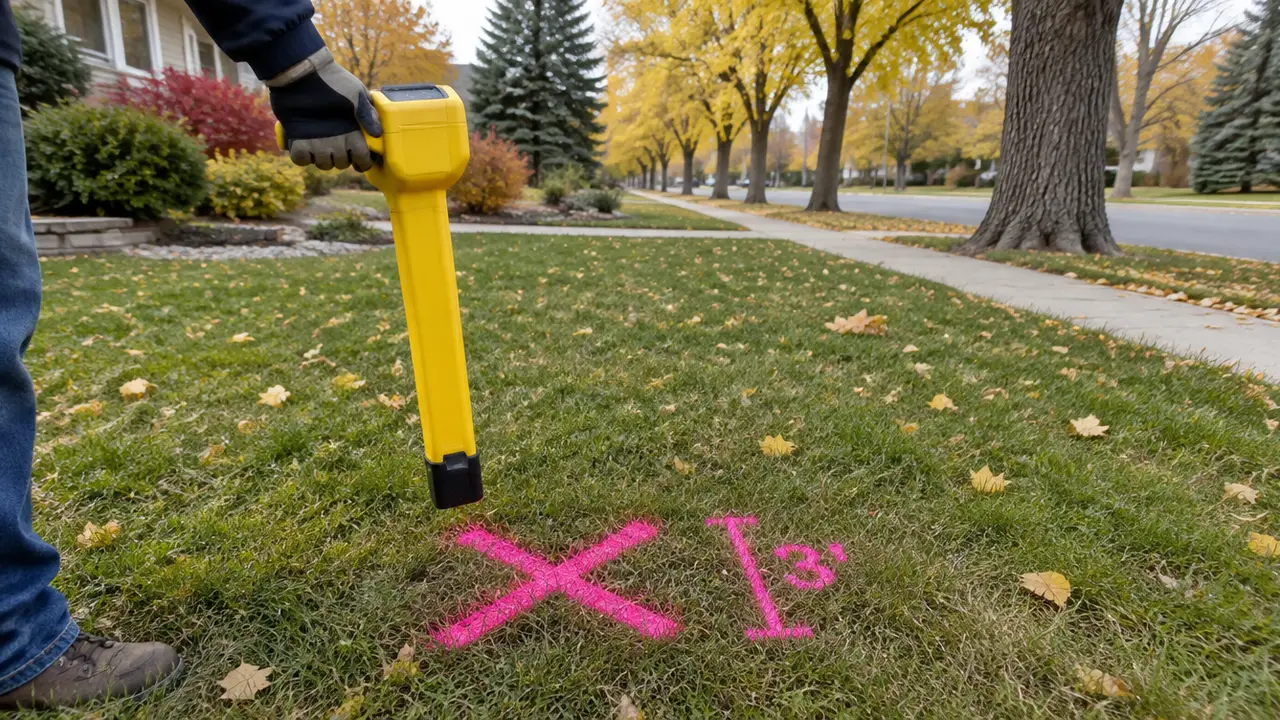
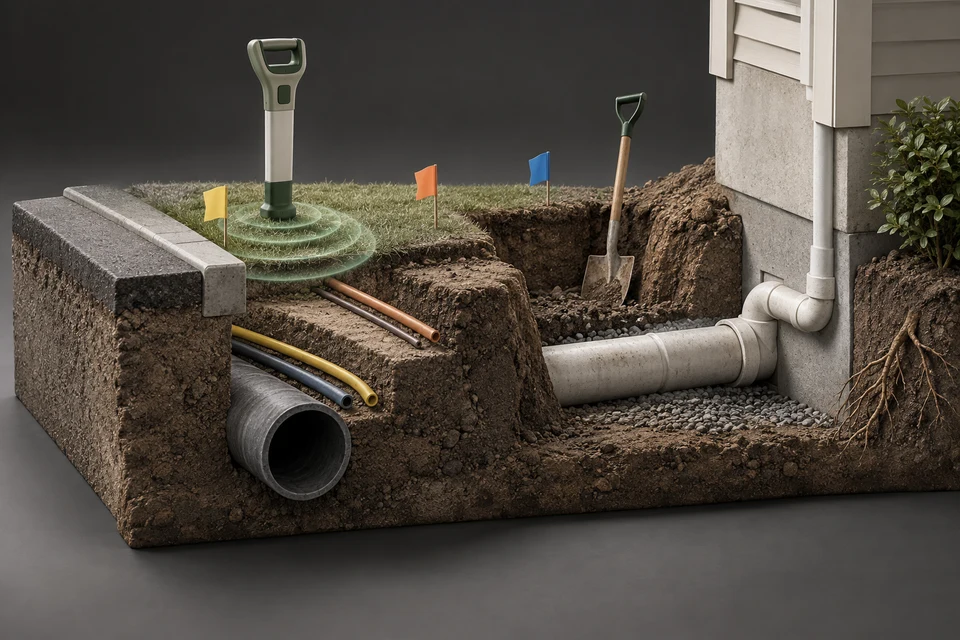
During the locate stage, flags appear for the gas and telecom lines that the public request covers, and a second set traces your own lateral, which only a private locator will mark. Around each utility mark the model shades a band one metre wide on either side, where the ground is opened by hand or hydrovac before the excavator is allowed close. See utility locates for a Calgary sewer dig for notice times and expiry.
The dashed line at 1.5 metres
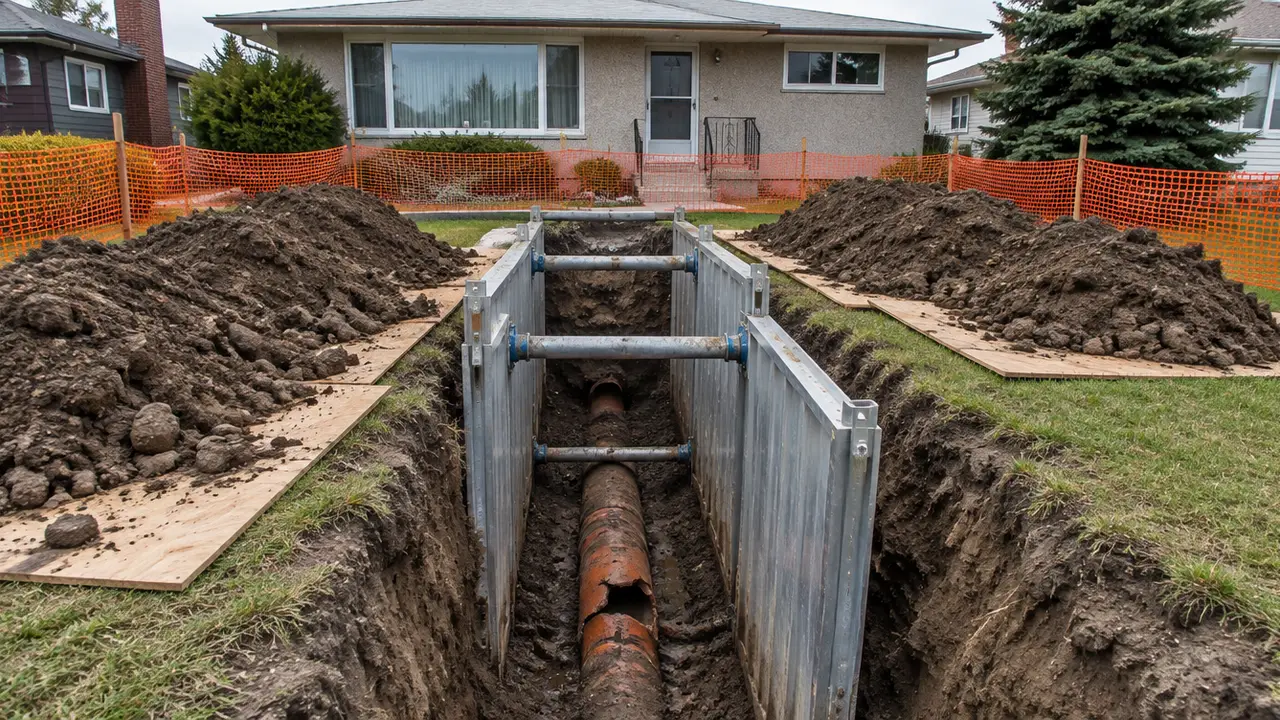
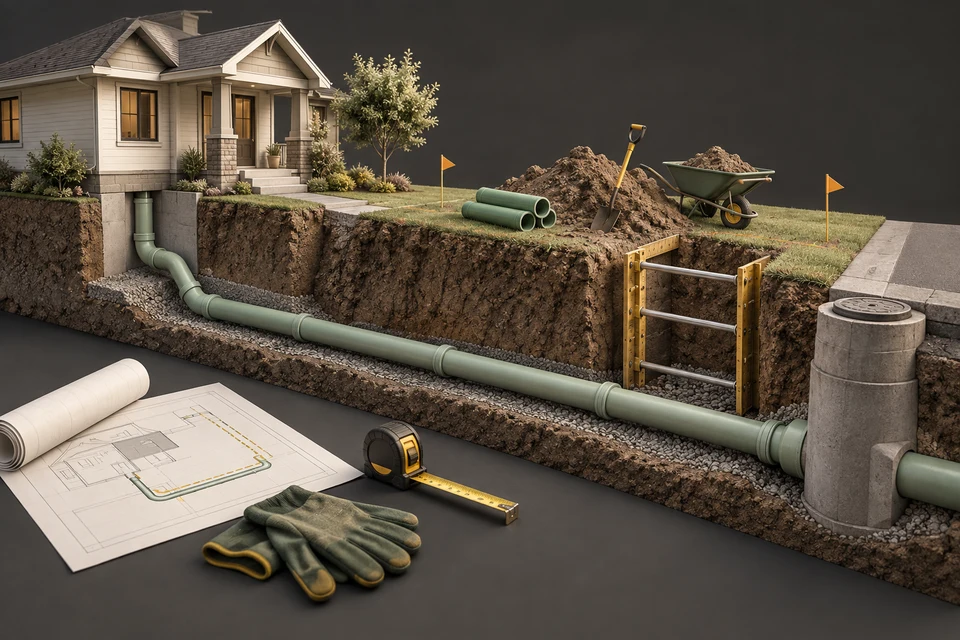
A lateral leaving below a basement floor starts deep and keeps falling toward the street, so almost the whole open-cut trench sits below the dashed 1.5 m line. Once the cut passes that depth, the model shows a trench box with spreaders, because Alberta's rules require protected or cut-back walls before anyone works down there. Trenchless methods open only small pits, which is a large part of their appeal on a crowded lot.
Method, surface, season and the City side
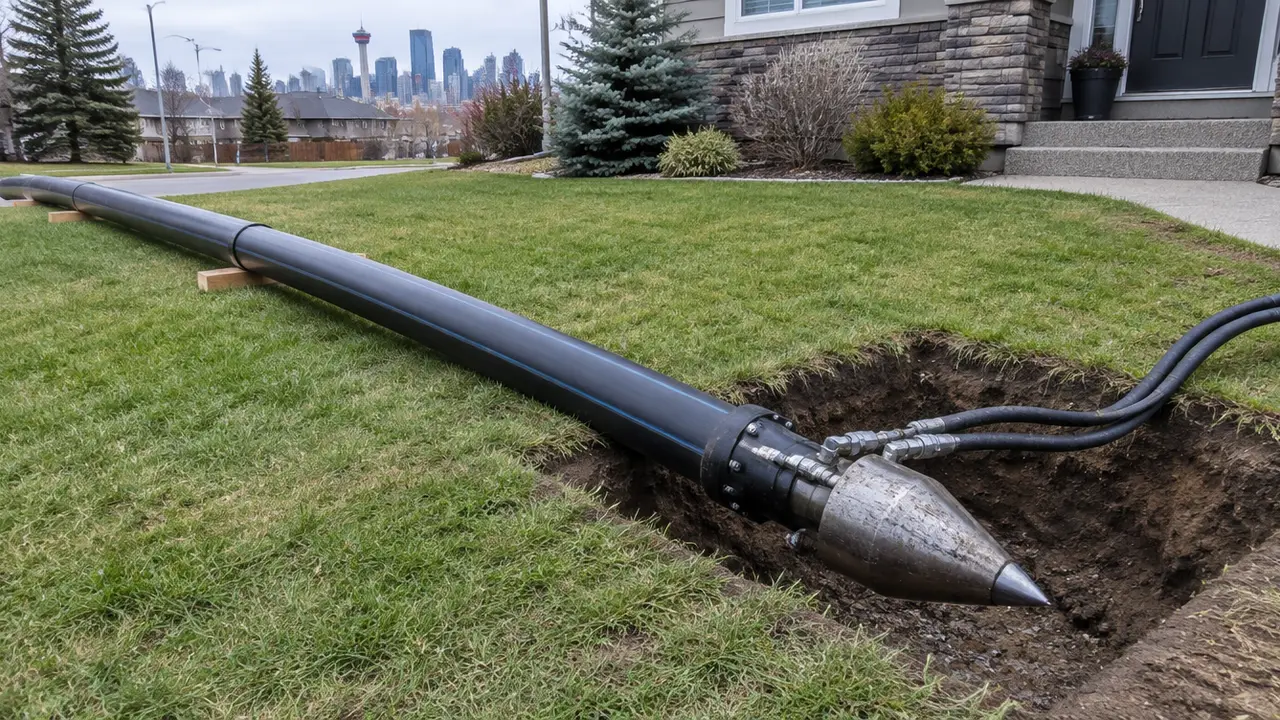
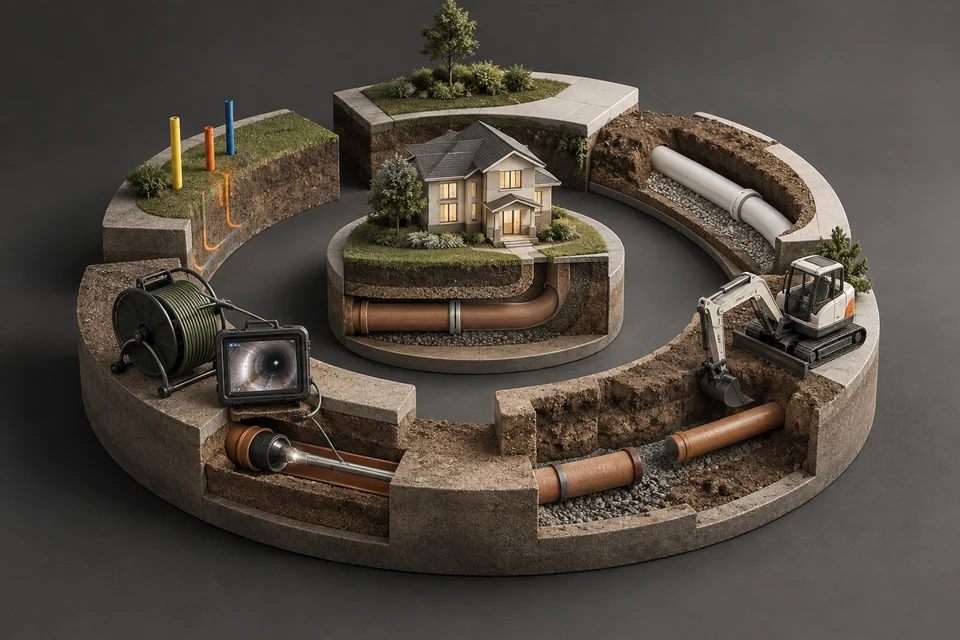
Switching method changes what happens on site: one long trench for open cut, a liner pushed in from the cleanout, two pits for a bursting head, or a single pit over one defect. Winter adds frost work and a temporary surface until spring. Ticking the City-side box stretches the dig into the boulevard, adds a right-of-way permit card and widens the planning range exactly as the timeline planner does.
The paperwork follows the job
The panel groups the fourteen items of the Permit & Locate Checklist and lights each group as its stage arrives, from the written scope before signing to the invoices filed at the end. Inspection is shown while the pipe and bedding are still open, and backfill waits for it. Nothing here is a schedule for a real address; the City and the utilities set the actual timing.
Where are you in the replacement?
Pick the closest match. Each path goes to the guide that answers it in full.
Replacement Timeline Planner
The Replacement Timeline Planner lays out the six steps of a sewer replacement, from camera and quotes to restoration, with a planning range for each based on your method, season, surface, City-side work and urgency. It shows a start-to-finish planning range, the step list, and a winter note when winter is chosen. Everything is labelled as planning ranges, not a schedule.
How the Replacement Timeline Planner works →
Also freePermit & Locate Checklist
A 14-item checklist for a Calgary sewer replacement: scope, credentials, permits, Utility Safety Partners and private locates, inspection, videos and records.
Replacement Timeline Planner
Read these first
The replacement process, step by step
Nine stages from first camera to final records, with what each one produces and what usually delays it.
CornerstonePermit & Locate Checklist
Fourteen items, from written scope to filed records, with ticks saved in your browser and a copy-ready summary.
CornerstoneUtility locates, public and private
Why Utility Safety Partners will not mark your own lateral, and what the hand-expose zone means for the dig.
CornerstoneCalgary soils and depth
Till, lake silts, gravel and cobble, groundwater and frost, and why most Calgary laterals sit deeper than 1.5 m.
What it looks like down there
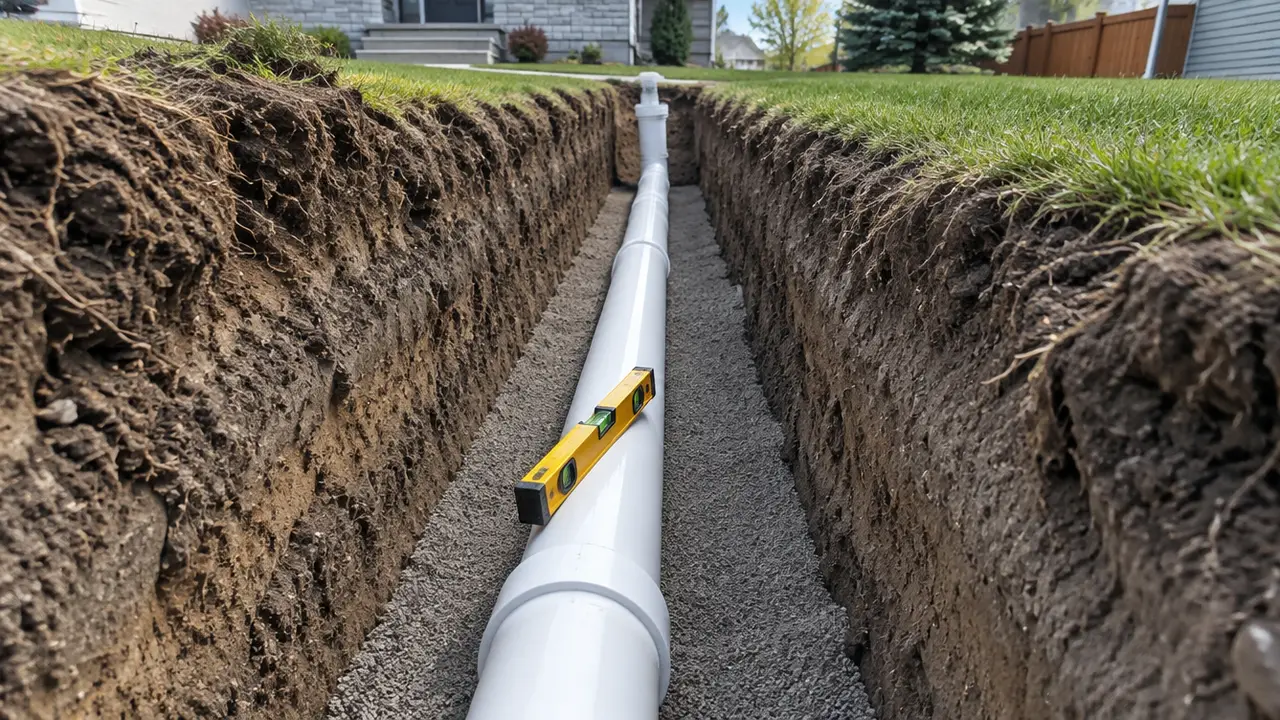
Illustrations of what this work involves and what a camera or a trained eye picks up. Every guide on CalgarySewerReplacement.ca carries more like these.
01 /What does replacing a sewer line in Calgary involve?
Replacing a sewer line in Calgary is a short dig wrapped in a longer process. The crew is usually on site for one to three days for an open-cut replacement, about a day for lining or a spot repair, and one to two days for pipe bursting. Around those days sit the steps that decide whether the job goes smoothly: camera footage and a written scope, a City of Calgary plumbing permit, locates for every buried line, an inspection before backfill, restoration of whatever was dug up, and a file of records you will keep for as long as you own the house.
- Scope it from footage
Map every defect to the yard, mark the property line, and write down the metres, method and material. See setting the scope.
- Choose who does it
Check the City business licence, trade certification, WCB clearance and insurance. See hiring a contractor.
- Permit and locates
A plumbing permit, public locates through Utility Safety Partners, and a private locate for your own lateral.
- Dig, lay and inspect
Trench protection past 1.5 m, pipe laid to grade, inspection while everything is visible. See the day-by-day guide.
- Backfill, restore and record
Compacted lifts, restoration by surface, and the after-video, permit and sketch filed together.
Every page on this site follows that sequence. If you only read one, read the replacement process step by step; if you want to see your own timeline, use the Replacement Timeline Planner.
02 /What makes a sewer replacement in Calgary different?
Four local conditions shape almost every Calgary job. The first is depth. In a house with a basement, the drain leaves below the basement floor, so the lateral starts deep and keeps falling toward the City main. Most of its length sits deeper than 1.5 m, which is where Alberta's Occupational Health and Safety Code requires trench walls to be cut back or protected before anyone works in them.
The second is the ground. The Alberta Geological Survey's mapping of the Calgary urban area describes glacial till, thick lake sediments of silt and very fine sand, and, in many places, quartzite gravel or hard sandstone under a thin cover, a combination it notes makes digging difficult. A replacement trench also follows the old one through previously dug soil, which Alberta's rules never treat as the most stable class. The soils and depth page explains what that means on site.
The third is the climate. Frost has to be broken or thawed before a winter dig, frozen spoil cannot be compacted, and a chinook can soften an open trench overnight. Alberta's Code is explicit that naturally frozen soil is not a substitute for trench protection. The fourth is ownership. The City of Calgary's published position is that it owns and maintains the sanitary service pipe from the main to the property line, and the homeowner owns and maintains it from the property line to the house. The property line is often behind the sidewalk, and the boulevard is City right-of-way, so a dig that reaches it needs City permits. Working on the City side covers that process.
03 /What do the City's records tell you before you dig?
The City of Calgary publishes the material and install year of the City-owned section of every residential sanitary service line in its open data. A HAUSE analysis of that dataset, covering 367,397 City-side service lines, finds about 20 percent coded TIL, the City's tile code, generally read as clay tile; 3.3 percent cast iron; 66.5 percent PVC; and 1.1 percent already relined with a cured-in-place liner. Clay tile dominates City-side installs of the 1960s and 1970s, and PVC takes over from the 1980s.
Those records cover only the section from the main to the property line. Your private section can be a different material and a different age, and only a camera tells you what it is. What the records do tell you is what your new pipe will have to join at the property line, and how likely it is that the original private pipe was clay or cast iron. In communities such as Maple Ridge, Rundle and Willow Park, more than 95 percent of City-side records carry the TIL code; in Rosscarrock and St. Andrews Heights, more than half are cast iron. CalgarySewers.ca maps the records community by community.
04 /How does this site fit with the rest of the HAUSE Sewer network?
CalgarySewerReplacement.ca covers the process of a Calgary replacement. Sister sites cover the questions around it, so each can go deep without repeating the others.
- Costs, financing, insurance and buying or selling an older Calgary home: CalgarySewerReplacement.com. This site's cost drivers page explains where in the process the money goes.
- Calgary's sewer system as data and civics: CalgarySewers.ca.
- Backups, clogs, roots and freeze-ups right now: CalgarySewers.com.
- Repair, reline or replace, and which method suits which pipe: SewerReplacement.ca.
- Camera inspections and reading a report: SewerInspector.ca.
- The pipe bursting method in depth: PipeBursting.ca.
- Cleaning a basement after sewage gets in: SewageCleanup.ca.
- Every sewer service lane across Canada in one place: the network hub, Sewers.ca.
Before the first call, three planning guides save time: finding where your sewer line runs, what a Calgary quote must include, and living at home during the job. Rebuilds and infills start instead with running a new sewer line to the street, and defects inside the foundation with under-slab replacement.
HAUSE Sewer publishes independent information and passes along quote requests; it does not dig, lay pipe or hold permits, and no sewer work is done by this site. When you are ready, request quotes with your footage, locate marks and scope, and use the Permit & Locate Checklist to keep the paperwork on track.
Every guide on CalgarySewerReplacement.ca
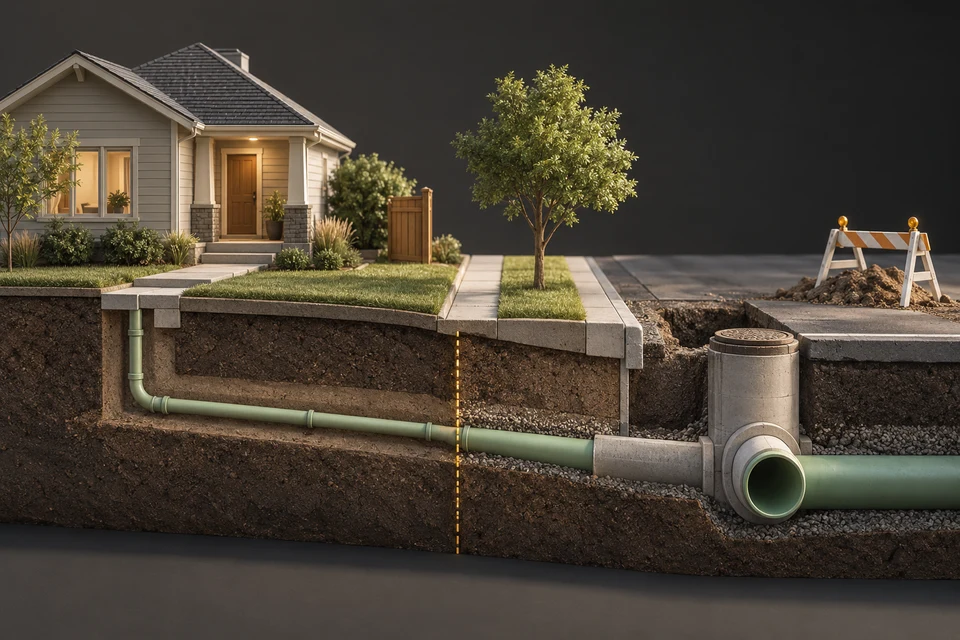
Will the City fix my sewer line? Working on Calgary's City side
Who is responsible for sewer line repair in Calgary, what 311 does when a defect sits past the property line, and the permits for digging in the boulevard.
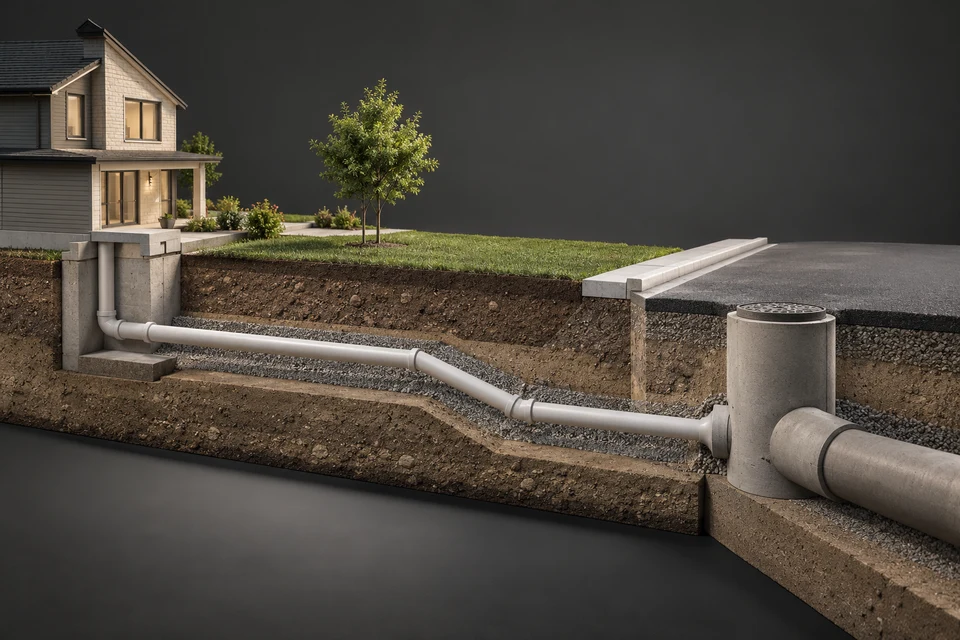
Running a new sewer line to the street in Calgary
Running a new sewer line to the street in Calgary for an infill or rebuild: who builds each part, old services, depth and grade rules, and inspection.
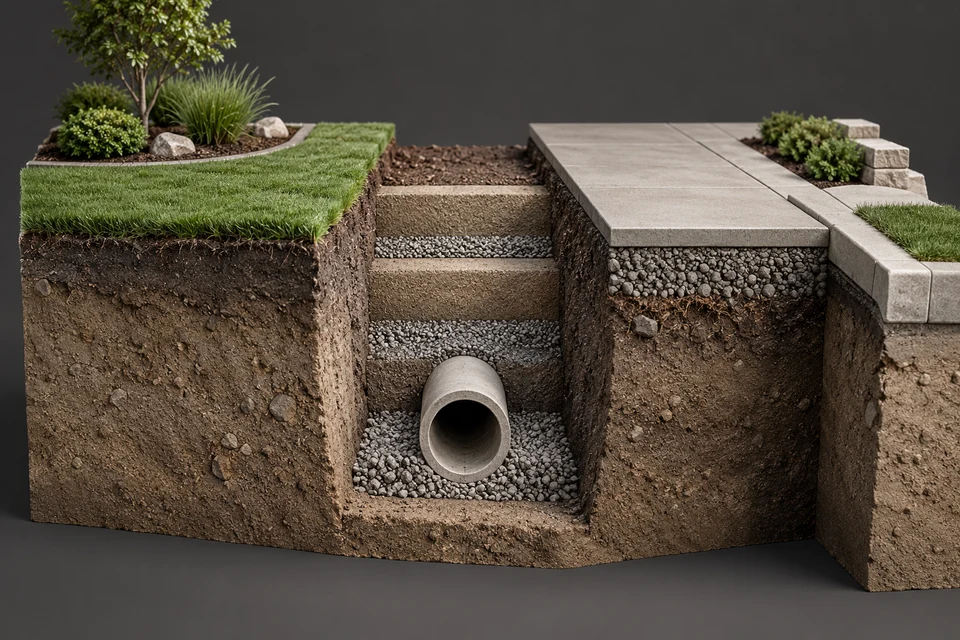
Backfill and restoration after a sewer replacement in Calgary
After a Calgary sewer replacement: backfill in compacted lifts, why clay trenches settle, and restoring lawns, landscaping, driveways and City boulevards properly.
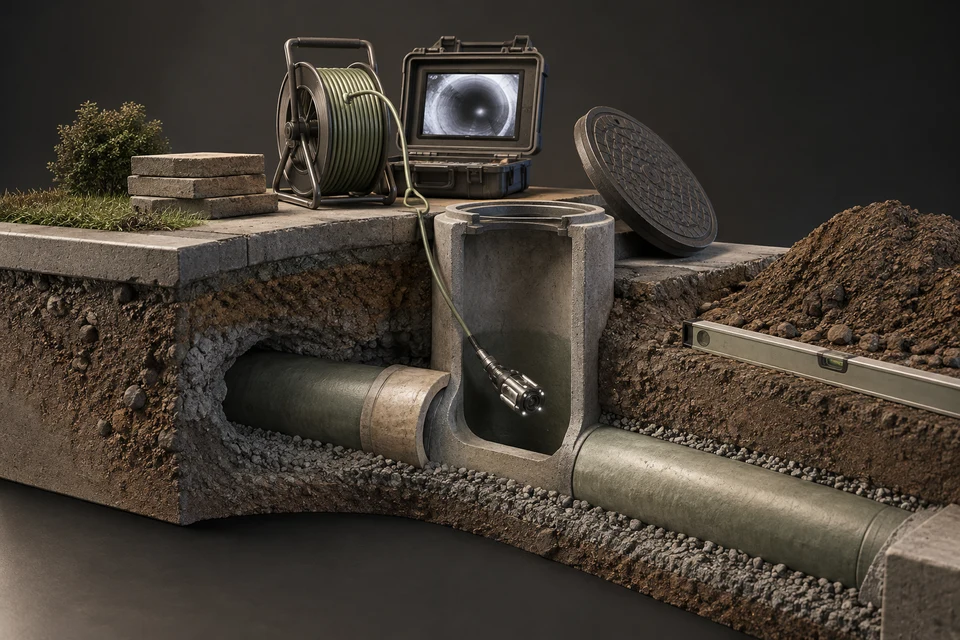
Inspections on a Calgary sewer replacement
What gets inspected on a Calgary sewer replacement: booking the City permit inspection, what must stay exposed, the after-video, grade checks and failed items.
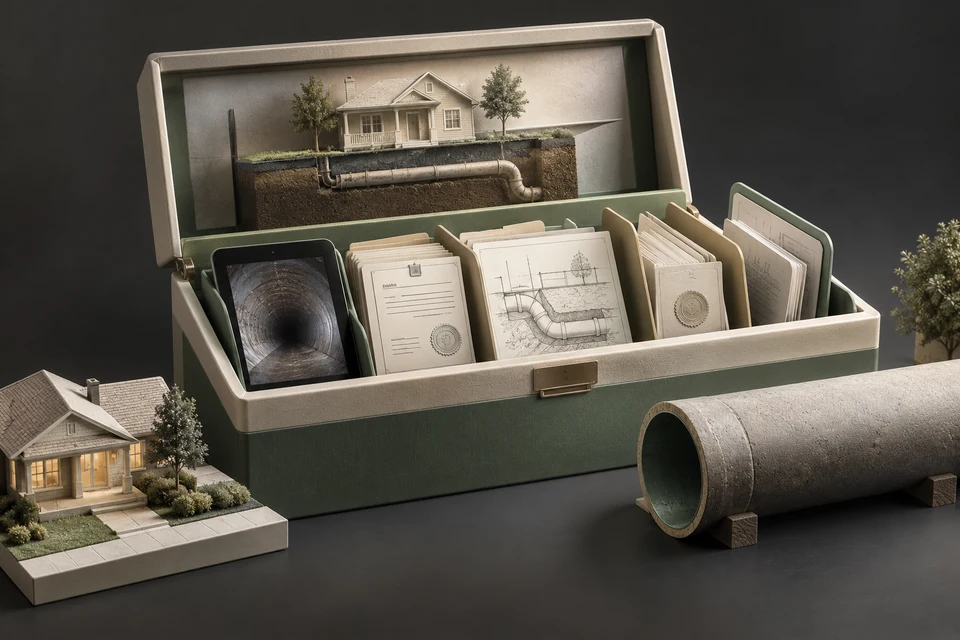
Keeping sewer replacement records for resale, claims and the next contractor
Records to keep after a Calgary sewer replacement: videos, permit and inspection, as-built sketch, warranty and invoices, and how they help at resale.
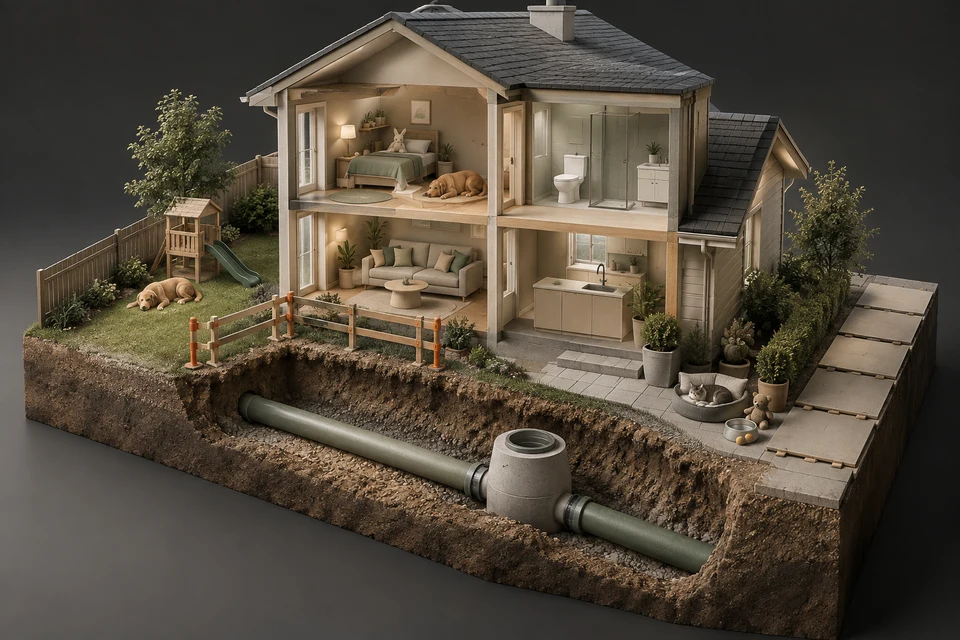
Living at home during a Calgary sewer line replacement
Living at home during a Calgary sewer line replacement: no-drain windows by method, planning water use, kids and pets near the trench, noise and sewer gas.
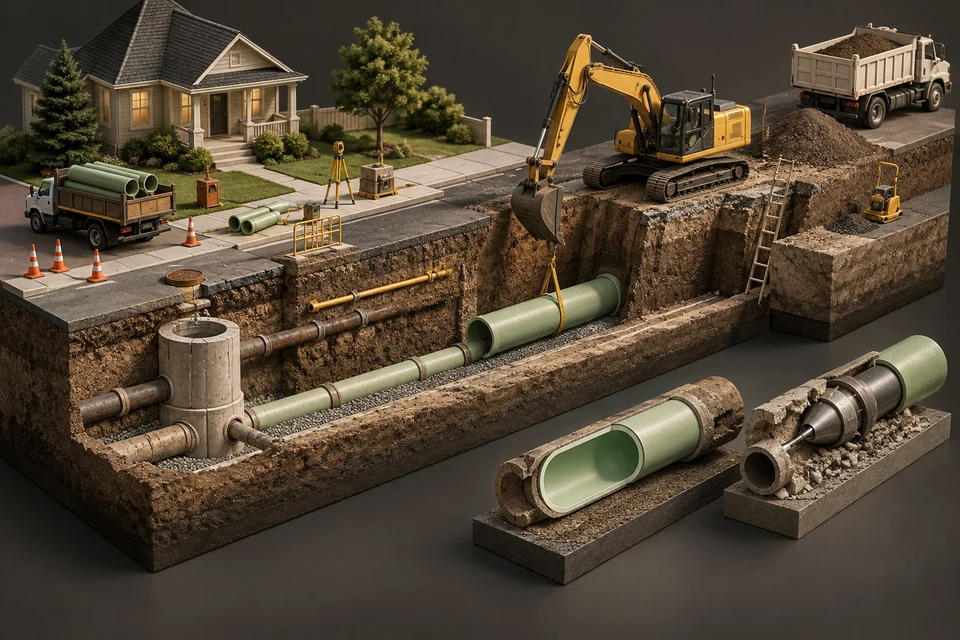
What a sewer replacement crew does, day by day
A Calgary open-cut sewer replacement day by day: set-up, exposing utilities, digging, laying to grade, inspection, backfill, and how lining or bursting differ.
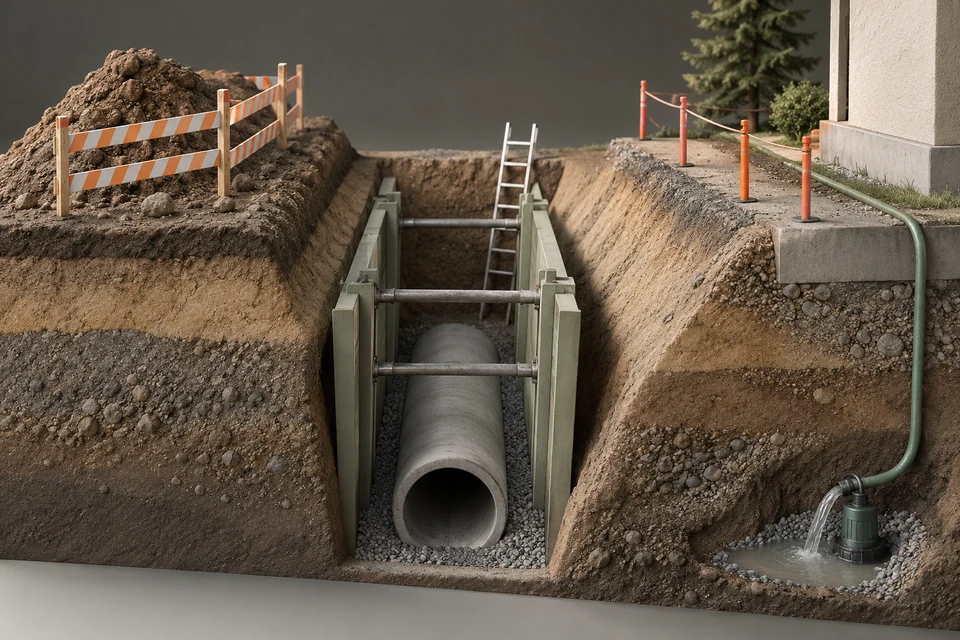
Trench safety on a Calgary sewer dig: what Alberta's rules require
Alberta trench rules on a Calgary sewer replacement: the 1.5 m line, shoring or sloped walls by soil type, spoil piles, exits, water and foundations near the dig.
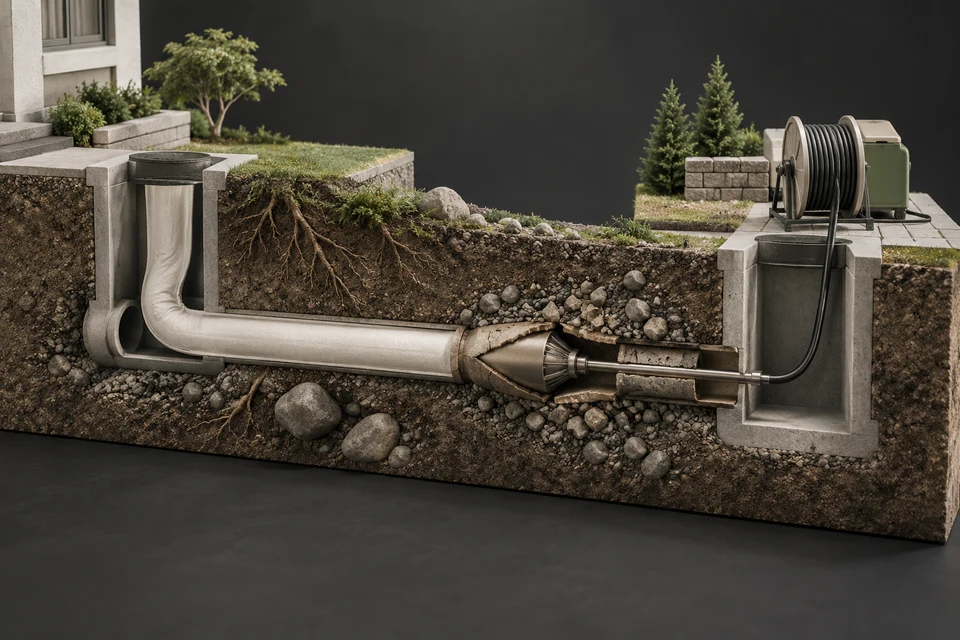
Trenchless sewer line replacement in Calgary: what happens on site
Trenchless sewer line replacement in Calgary on site: how a lining day and a bursting day run, access pits, cobble and sags that rule it out, permits and records.
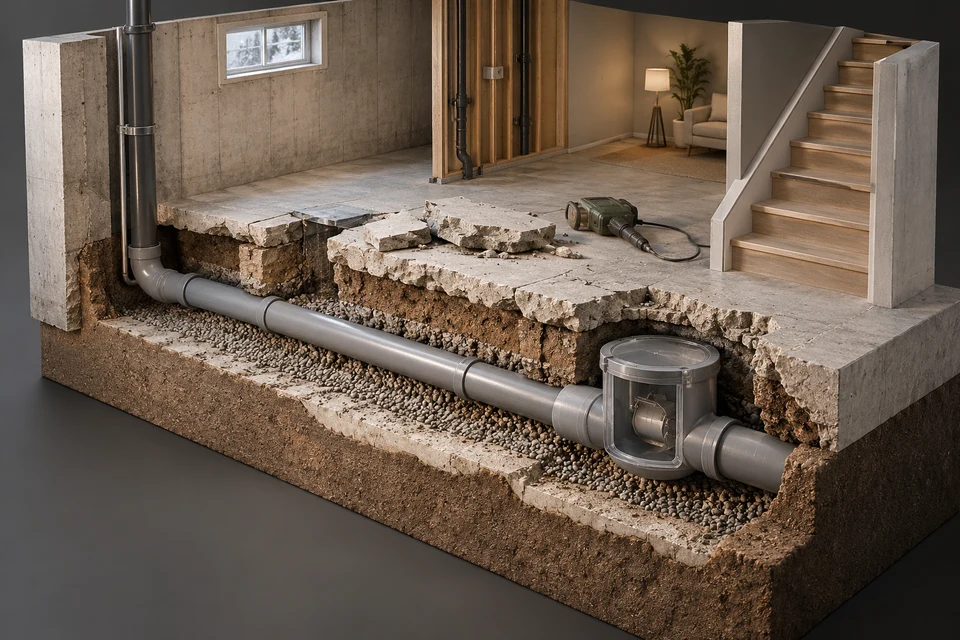
Replacing the building drain under a Calgary basement floor
Replacing the sewer under a Calgary basement floor: proving the defect is inside, the permit, slab work step by step, backwater valve rules and suites.
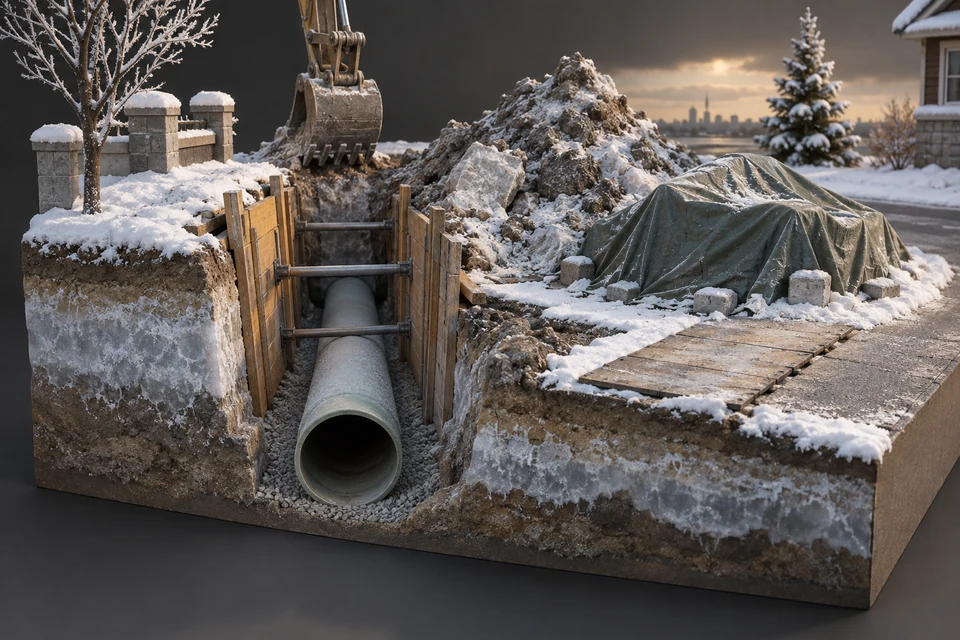
Replacing a sewer line in a Calgary winter
Winter sewer line replacement in Calgary: breaking frost, thawing and hoarding the trench, frozen spoil and backfill, chinook thaws and temporary restoration.
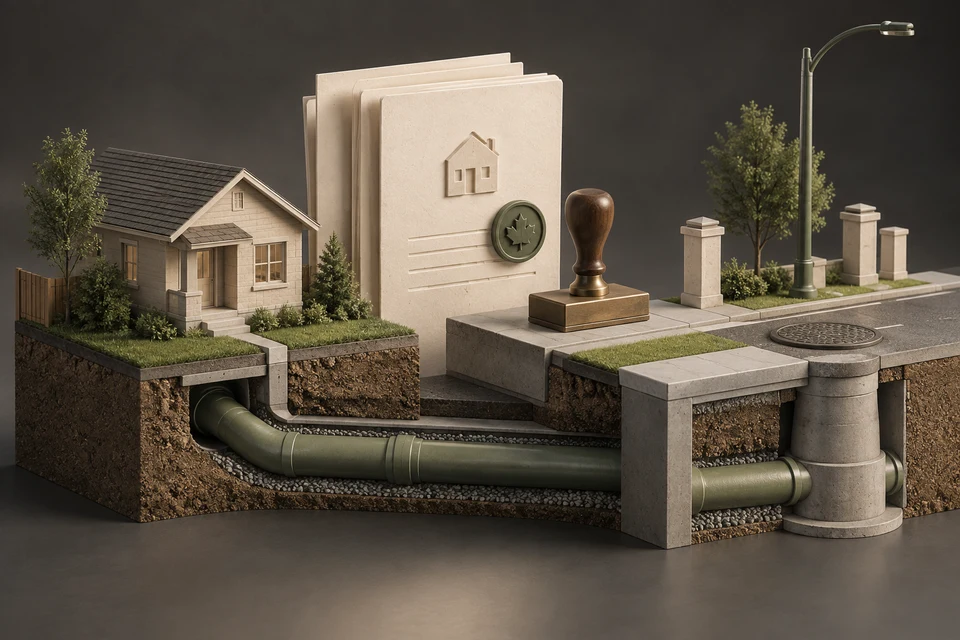
City of Calgary plumbing permits for sewer line work
When a City of Calgary plumbing permit is needed for sewer line work, who applies, the homeowner permit fee, inspections, and the extra permits for City land.
Can you replace your own sewer line in Calgary?
Can you replace your own sewer line in Calgary? The homeowner permit rules, locates, trench depth and safety limits, and the parts of the job owners can take on.
Utility locates before a Calgary sewer dig: public and private
Locates before a Calgary sewer dig: Utility Safety Partners notice and response times, why your own lateral needs a private locate, hand-expose zones and expiry.
How a sewer line replacement works in Calgary, step by step
Sewer line replacement in Calgary from first camera to final records: scope, permits, Utility Safety Partners locates, excavation, inspection and restoration.
How to find where your sewer line runs on a Calgary lot
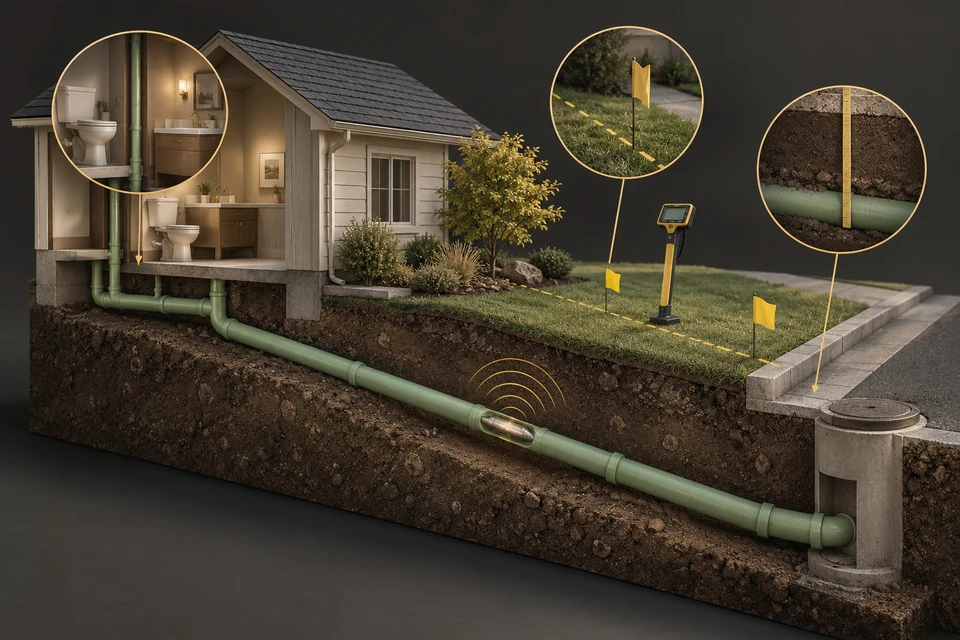
How to find where your sewer line runs in Calgary: clues inside the house, the City's service line map, yard signs, a sonde trace, and how deep lines sit.

Hiring a sewer line replacement company in Calgary
How to vet Calgary sewer line repair and replacement companies on process: trade credentials, City licence, permits, locates, WCB clearance and restoration terms.
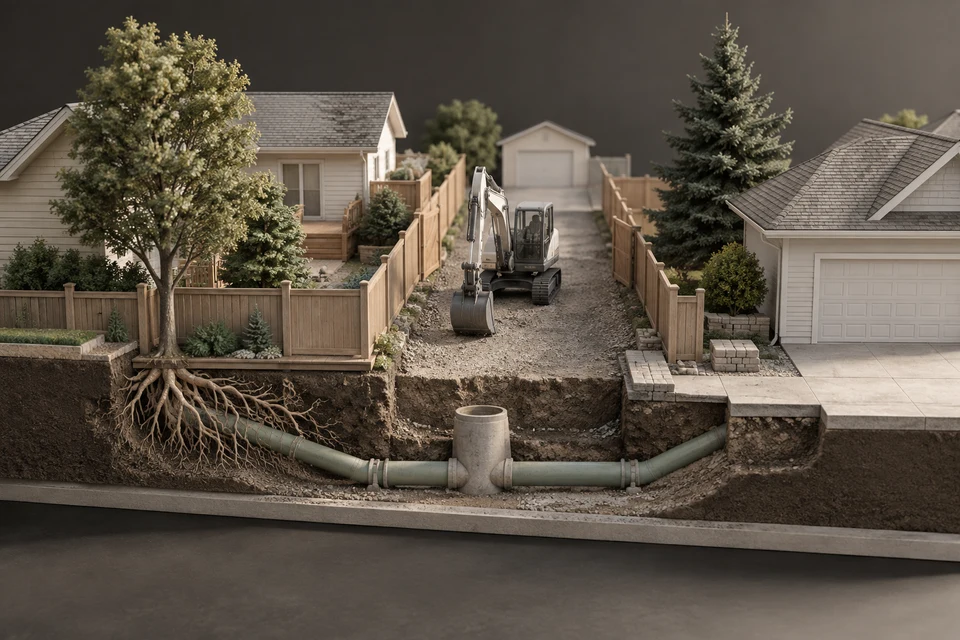
Neighbours, access and shared lines during a Calgary sewer replacement
A Calgary sewer replacement and the neighbours: machine access, shared driveways and lanes, shared laterals, their trees and fences, and what to put in writing.

Sewer line repair or replacement in Calgary: how to set the scope
Calgary sewer line repair or full replacement? How to turn camera footage into a written scope: which metres, which method, where it stops and what rides along.
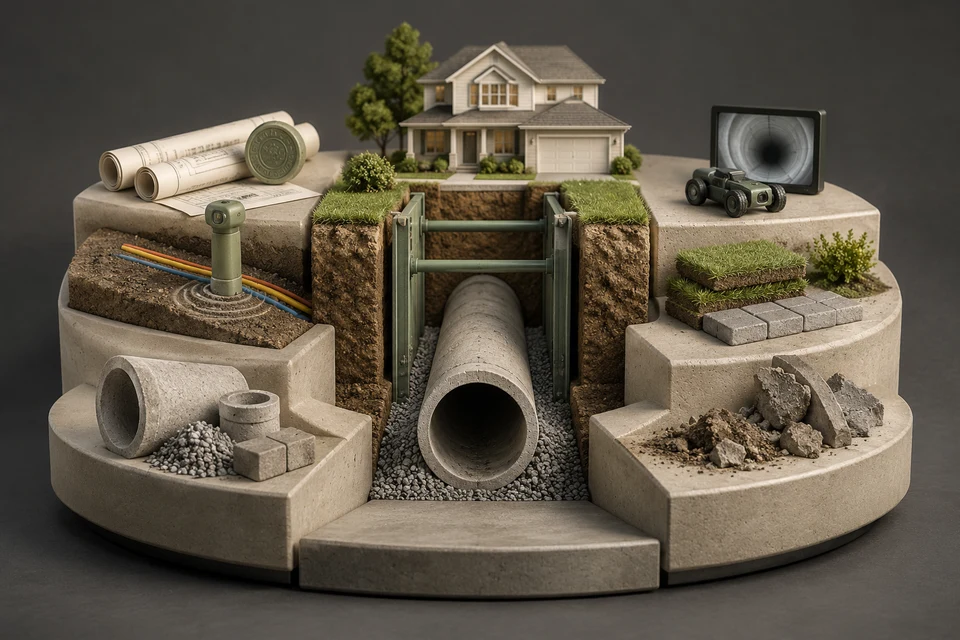
What a Calgary sewer replacement quote must include
What a Calgary sewer line replacement quote must include: permit, locates, trench protection, inspection, restoration, unit rates and exclusions.
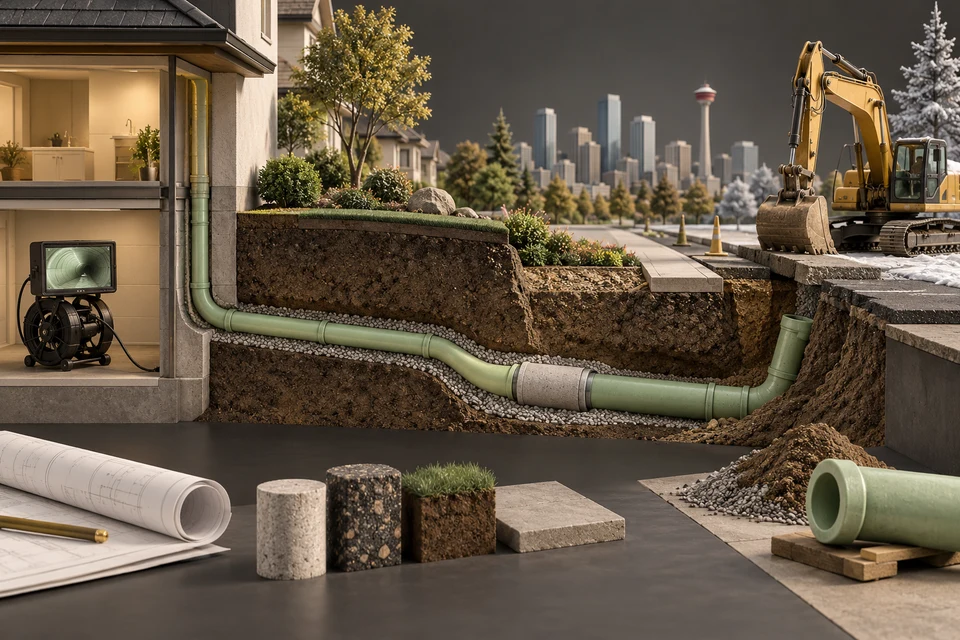
What drives sewer line replacement cost in Calgary, step by step
Why sewer line replacement costs what it does in Calgary: the cost driver at each step, from camera and permits to depth, surface, season and restoration.
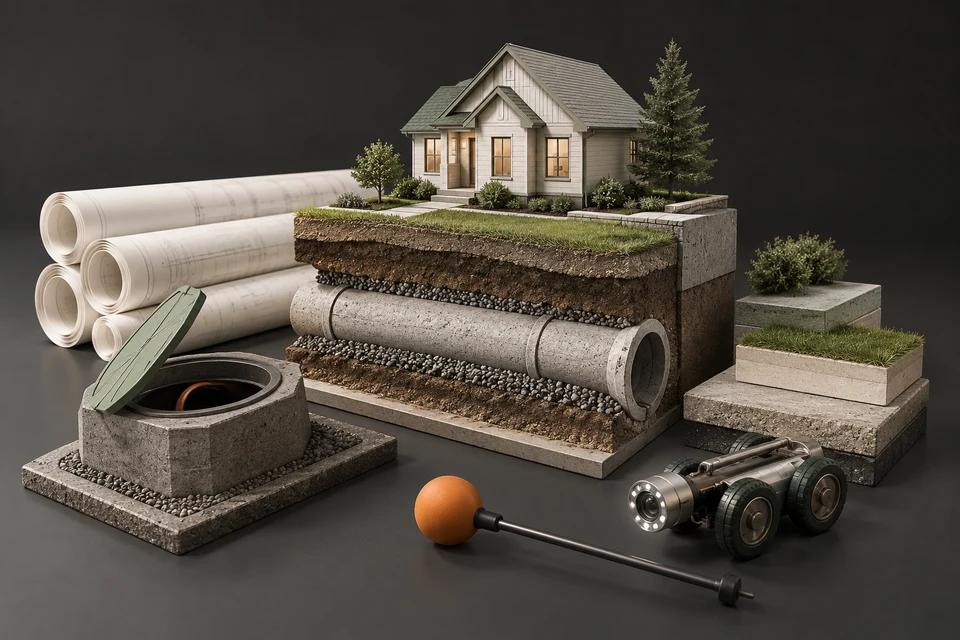
Permit & Locate Checklist
A 14-item checklist for a Calgary sewer replacement: scope, credentials, permits, Utility Safety Partners and private locates, inspection, videos and records.
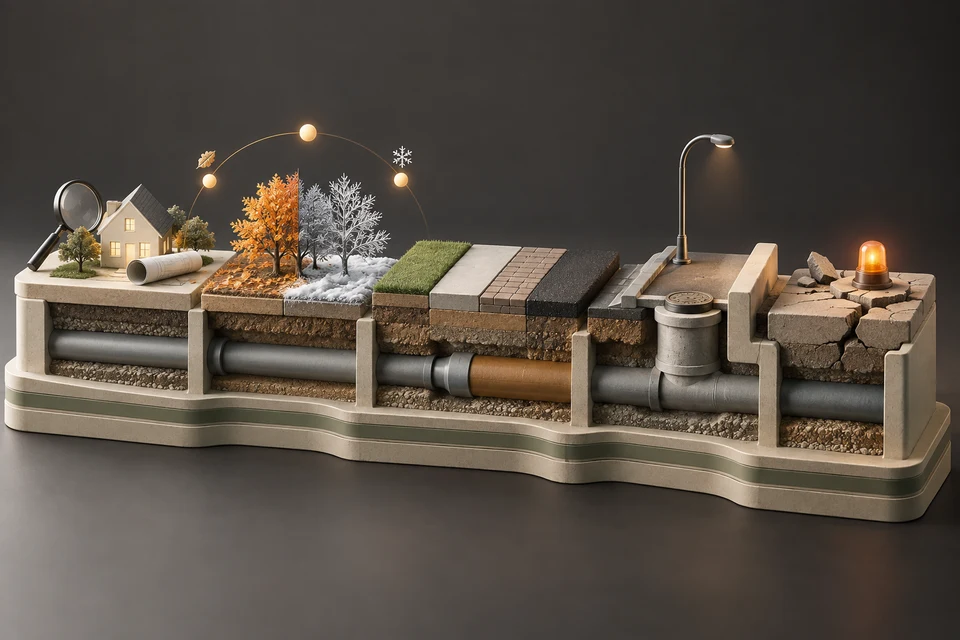
Replacement Timeline Planner
Plan a Calgary sewer replacement timeline by method, season, surface, City-side work and urgency: each step's planning range, a total range and a winter note.
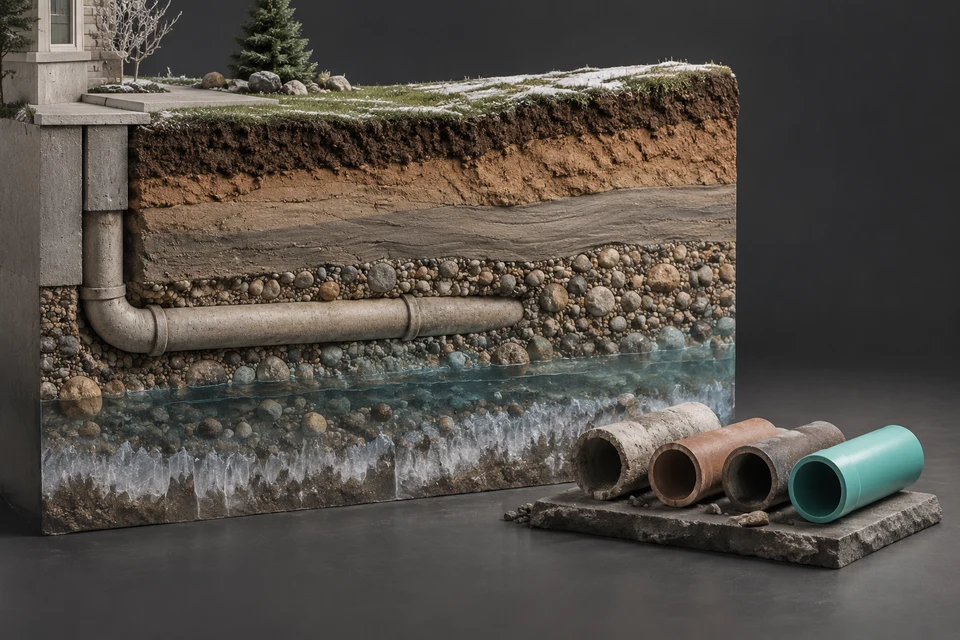
Calgary soils and sewer line depth
What a Calgary sewer replacement digs through: clay-rich till, lake silts, gravel and cobble, groundwater and frost, typical lateral depths, and the pipe era by era.
Frequently asked
Does a Calgary sewer replacement need a City permit?
Yes. The City of Calgary lists replacing water and sewer lines in or around the home as plumbing permit work. A hired contractor applies; an eligible owner doing the work personally can get a homeowner permit.
Who is responsible for which part of my sewer line?
The City's published position is that it owns and maintains the section from the main to the property line, and the homeowner owns and maintains it from the property line to the house. Call 311 about a specific case.
Who requests the utility locates?
Usually the contractor, through Utility Safety Partners, at least three full working days ahead. Your own sewer lateral needs a separate private locate.
How long does a sewer replacement take in Calgary?
Days on site and usually a few weeks overall. Open cut takes about one to three days on site, lining about one, bursting one to two. Permits, locates and restoration fill the rest.
Is winter sewer replacement possible in Calgary?
Yes, with extra time for frost and usually temporary restoration until spring. Many owners keep a working line flowing and schedule the dig after the thaw.
Where can I find Calgary replacement costs?
CalgarySewerReplacement.com covers Calgary costs, financing and insurance. This site's cost page explains which steps of the process drive the price.
Is CalgarySewerReplacement.ca a contractor?
No. The site belongs to HAUSE Sewer, which publishes independent information and forwards quote requests; it performs no sewer work.
Describe the problem once. Get a straight answer.
Send the symptoms and anything you already know — age of the house, what a camera found, what you have been quoted. The HAUSE Sewer desk replies with next steps and, where available, a local contractor for the job.
Sewage backing up right now? Stop using water, keep people away from the water, and do not touch electrical equipment near it.